


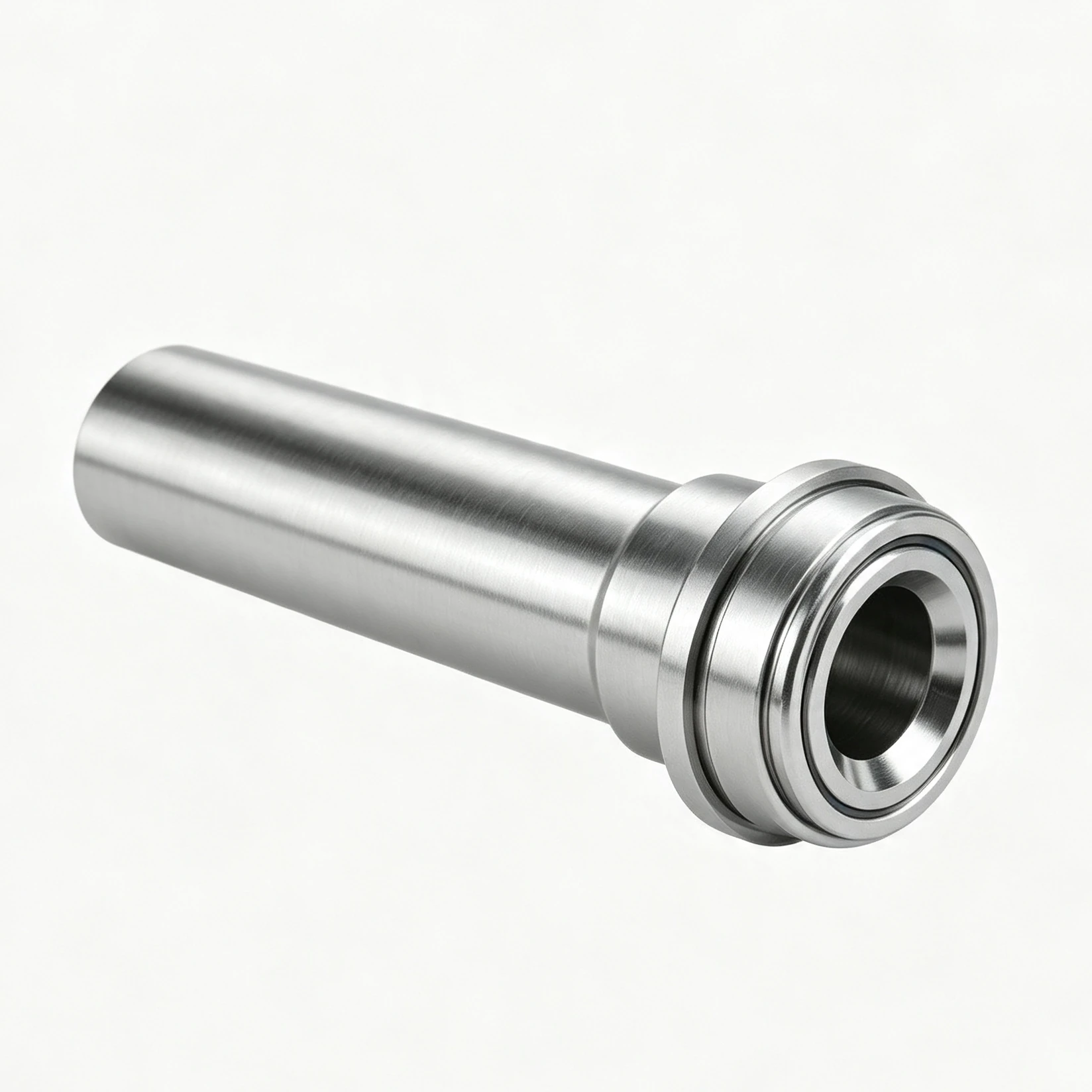
Treat the O-Ring as a Sealing System
An O-ring sealed coolant fitting works only when the seal, groove, mating bore or face, adapter material, lubricant, assembly motion, temperature, pressure, and fluid chemistry are compatible. Selecting a nominal O-ring size without controlling the hardware around it leaves major leakage risks unresolved.
Define whether the joint is radial or axial, static or dynamic during use, retained by a clip, thread, clamp, press fit, or another mechanism, and how the installer knows full engagement has been reached.
O-Ring Groove Design Inputs
| Design factor | Engineering decision | Risk if uncontrolled |
|---|---|---|
| Squeeze | Set from seal cross-section, groove depth, mating tolerances, and operating state | Too little can leak; too much can raise force, heat, wear, or damage |
| Stretch | Control on the installed diameter and include tolerances | Excess stretch reduces cross-section and changes squeeze |
| Groove fill | Leave volume for thermal expansion, swelling, and tolerance stack | Overfill can extrude or overload the seal |
| Pressure gap | Evaluate clearance, pressure direction, cycling, and backup rings | Elastomer can extrude into a gap and fail |
| Lead-in | Provide chamfers, edge breaks, and protected transitions | Sharp edges can shave, twist, or cut the O-ring during assembly |
Seal Material and Coolant Compatibility
Choose the elastomer from the actual coolant formulation, not the broad phrase water glycol. Concentration, inhibitor package, contaminants, pH, temperature, pressure, cleaning chemicals, storage, and exposure time can change swelling, hardness, compression set, extraction, and low-temperature flexibility.
EPDM, FKM, NBR, silicone, and other families contain many compounds with different behavior. Specify material family, compound or approved equivalent, hardness, dimensions, manufacturing standard, cleanliness, and traceability as required.
CNC Machining and Surface Requirements
The adapter may be produced primarily by CNC turning, followed by groove cutting, drilling, boring, facing, deburring, and cleaning. Control the groove diameter, width, depth, corner radii, concentricity, sealing diameter, lead-in, face position, and any retention features from functional datums.
Surface finish should be specified where it affects sealing, but a roughness value alone may not prevent circumferential scratches, chatter, dents, embedded debris, or an unfavorable lay direction. Define acceptable defects and protect the seal land during handling, inspection, passivation, cleaning, and packaging. See right-angle coolant adapter machining for related thread and passage controls.
Assembly Controls
- Confirm the adapter, mating component, seal part number, lubricant, and drawing revision.
- Inspect the groove, sealing land, lead-in, and O-ring under defined lighting and magnification where needed.
- Clean with approved materials and prevent fibers, chips, dust, and dried chemistry from reaching the seal.
- Apply only the specified compatible lubricant in a controlled quantity.
- Install without twisting, rolling, cutting, or overstretching the O-ring.
- Mate the components with controlled alignment and insertion; do not force a misaligned tube.
- Verify retention, engagement depth, orientation, and any assembly witness feature.
Leak, Pressure, and Lifecycle Testing
Define test medium, pressure, temperature, ramp, stabilization, dwell, instrumentation, acceptance limit, and post-test condition. Gas tests can be sensitive but require safe pressure control and a correlation to the liquid-service risk. Liquid tests can better represent wetting but may complicate drying and cleanliness. Proof-pressure testing verifies structural margin under specified conditions; it does not replace a sensitive leak test.
Qualification may also require pressure cycling, temperature cycling, vibration, side load, insertion cycles, coolant aging, corrosion exposure, and post-test dimensional or leakage checks. The acceptance plan should reflect the severity and serviceability of the final system.
Frequently Asked Questions
What information is needed to choose an O-ring for coolant service?
Define coolant chemistry, temperature, pressure or vacuum, exposure, cleaning agents, installation, and service-life requirements.
Can an O-ring groove be copied from a generic chart?
A chart is only a starting point; final geometry must include tolerances, squeeze, stretch, fill, thermal change, pressure, motion, and assembly.
Why does surface finish matter on a coolant adapter?
Finish, lay, waviness, defects, and edge condition can create leak paths or damage the seal during installation.